


If you have ever felt that quiet itch to create something of your own outside your day job, you know that exact feeling of staring at a blank screen and wondering if anyone out there would ever care.
Back in 2020, during the height of pandemic lockdowns, my husband and I were living in our one-bedroom condo. I had my 9-5 marketing job, but with nowhere to go and suddenly a lot of extra hours at home, that creative itch was getting way too loud to ignore.
The fridge box castle era
To be fair, this was not random. I have always been obsessed with stationery, drawing, and greeting cards.
Growing up, I was that kid who spent every lunch period volunteering in the art room, joined art club without hesitation, and turned every school project into an elaborate craft experiment.
Fun fact: in elementary school, my parents bought a new refrigerator, and I dragged the massive cardboard box into the living room to paint an entire castle for our school play. I wish I had a photo to prove it, but smartphones were definitely not a thing back then. Wait, did I just age myself?
So in 2020, I did what felt natural. I pulled out my base-model iPad (the one I used to binge Netflix and do follow-along workouts with), downloaded the Procreate app, and started sketching greeting card designs. I threw up a few listings on Etsy with zero expectations and went right back to my regular routine.
The literal panic of my first sale
Then one random afternoon, my phone went off with a notification: I made a sale.
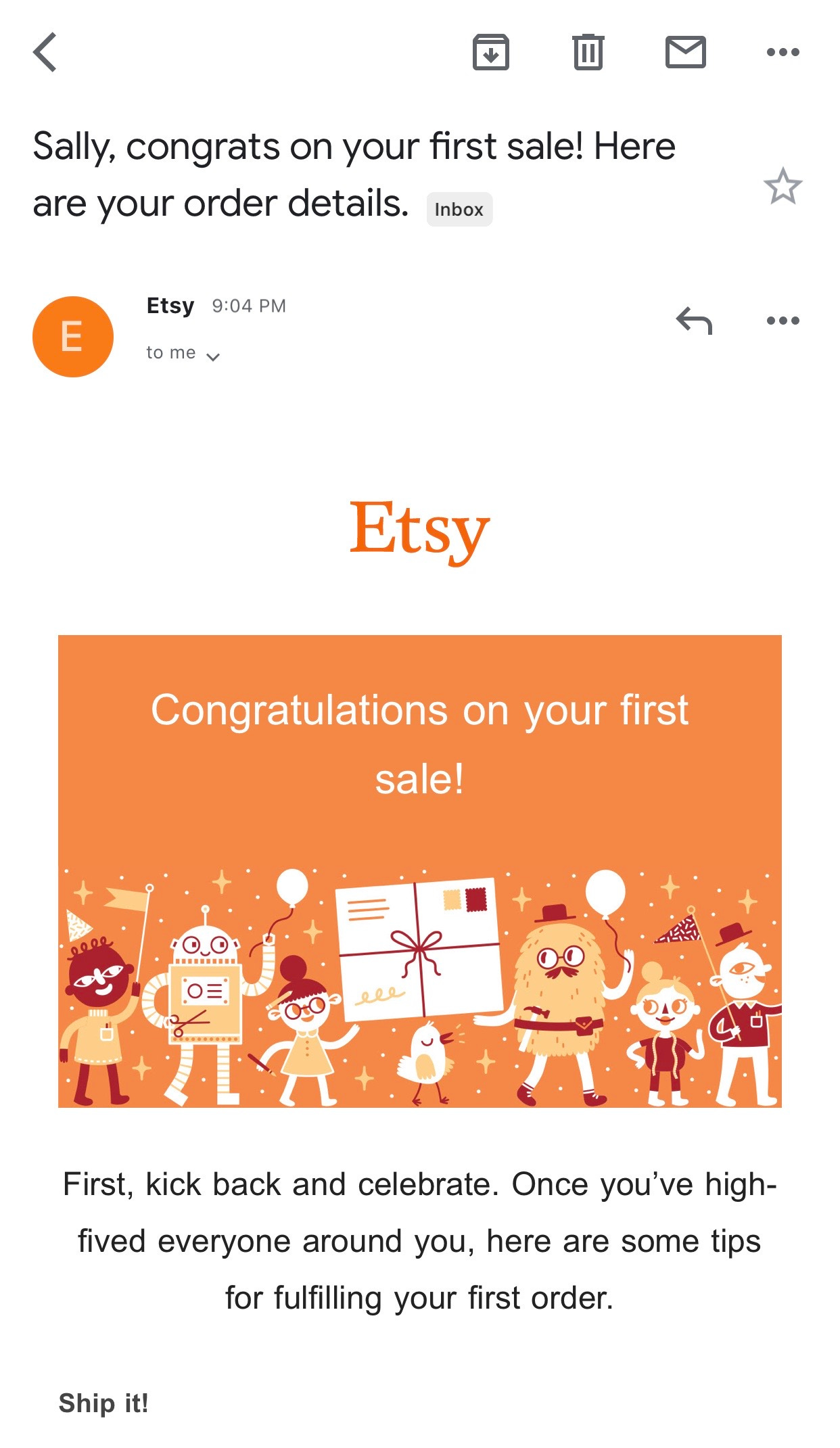
I kid you not, I practically fell off my chair. Complete disbelief. A total stranger on the internet had just handed over their hard-earned money for something I drew sitting on my couch.
Once the initial adrenaline rush wore off, pure panic set in. Because while I had an idea of how to make greeting cards in theory, in reality I had zero clue about actual logistics.
I had not printed a single card. I had no packaging ready. Nothing. I guess you could say I was a bit of a risk-taker back then, or maybe I didn’t think I’d be able to sell anything.
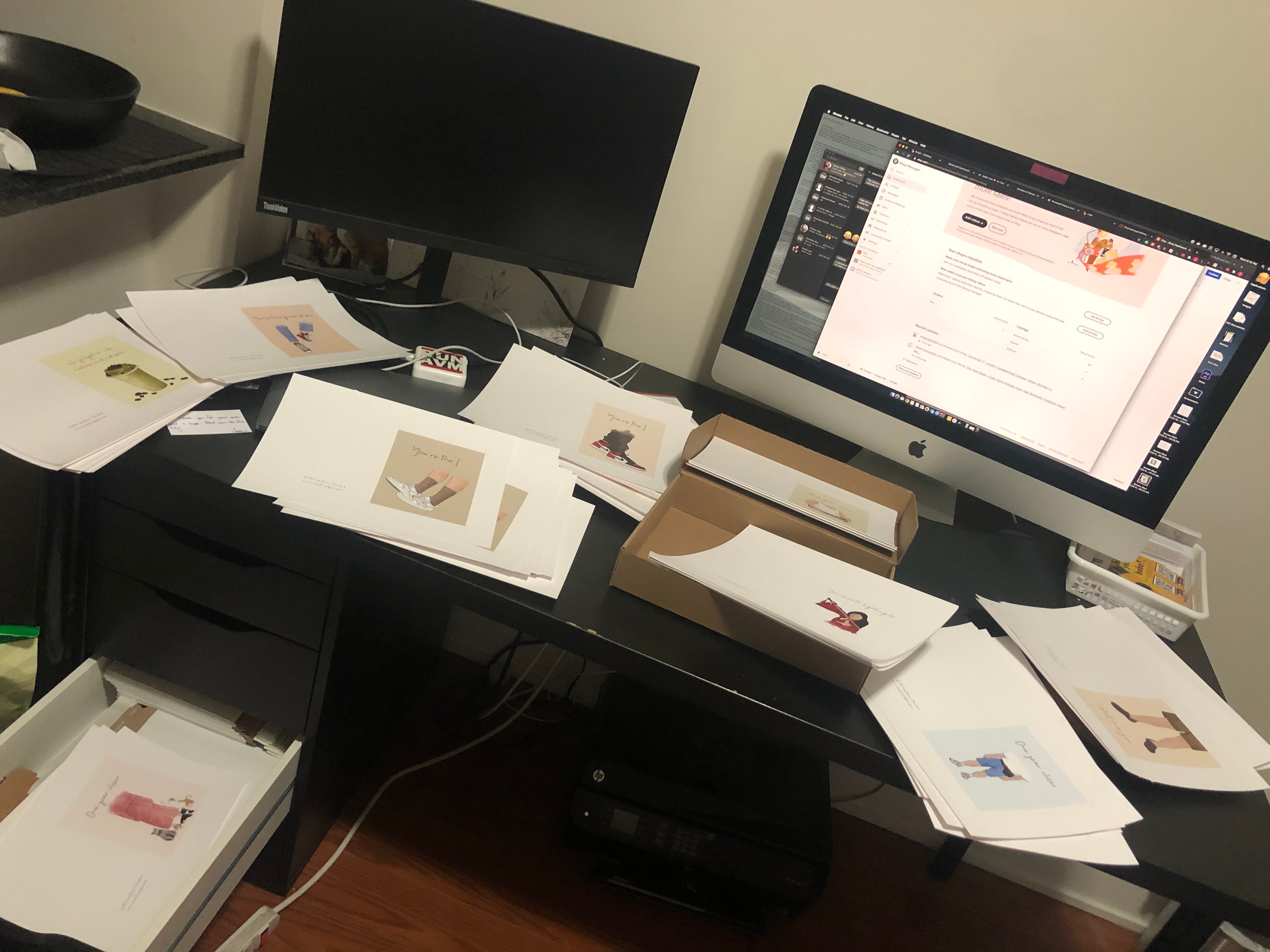
Soooo I exported my file to a PDF, loaded it onto a USB thumb drive, and ran straight to Staples. I had them print the sheet, rushed home, grabbed an exacto knife and a ruler, carefully trimmed the edges, scored the fold by hand, slipped it into an envelope, and dropped it in the mail.
Looking back, it was messy, chaotic, and completely unpolished. But that one clumsy order was the spark.
Since then, that little experiment has grown into a five-figure business with almost 8,000 orders, all while working a full-time job and raising two young kids.
How it actually scaled without taking over my life
Building a physical product shop on the side can easily eat up every spare second if you let it. Once I proved people wanted what I was making, I had to get smart about how I worked.
Here are the three practical rules that made it sustainable:
1. I stopped reinventing the wheel and built a real fulfillment system
Running to Staples with a USB drive was fine for order number one, but it was not going to work for order fifty.
I set up templates for print-ready files, opened a proper business account at Staples so I could submit print jobs digitally, and created designated inventory days.
I started batch-prepping mailers and packaging supplies in advance so that when orders rolled in, packing took minutes instead of an entire evening.
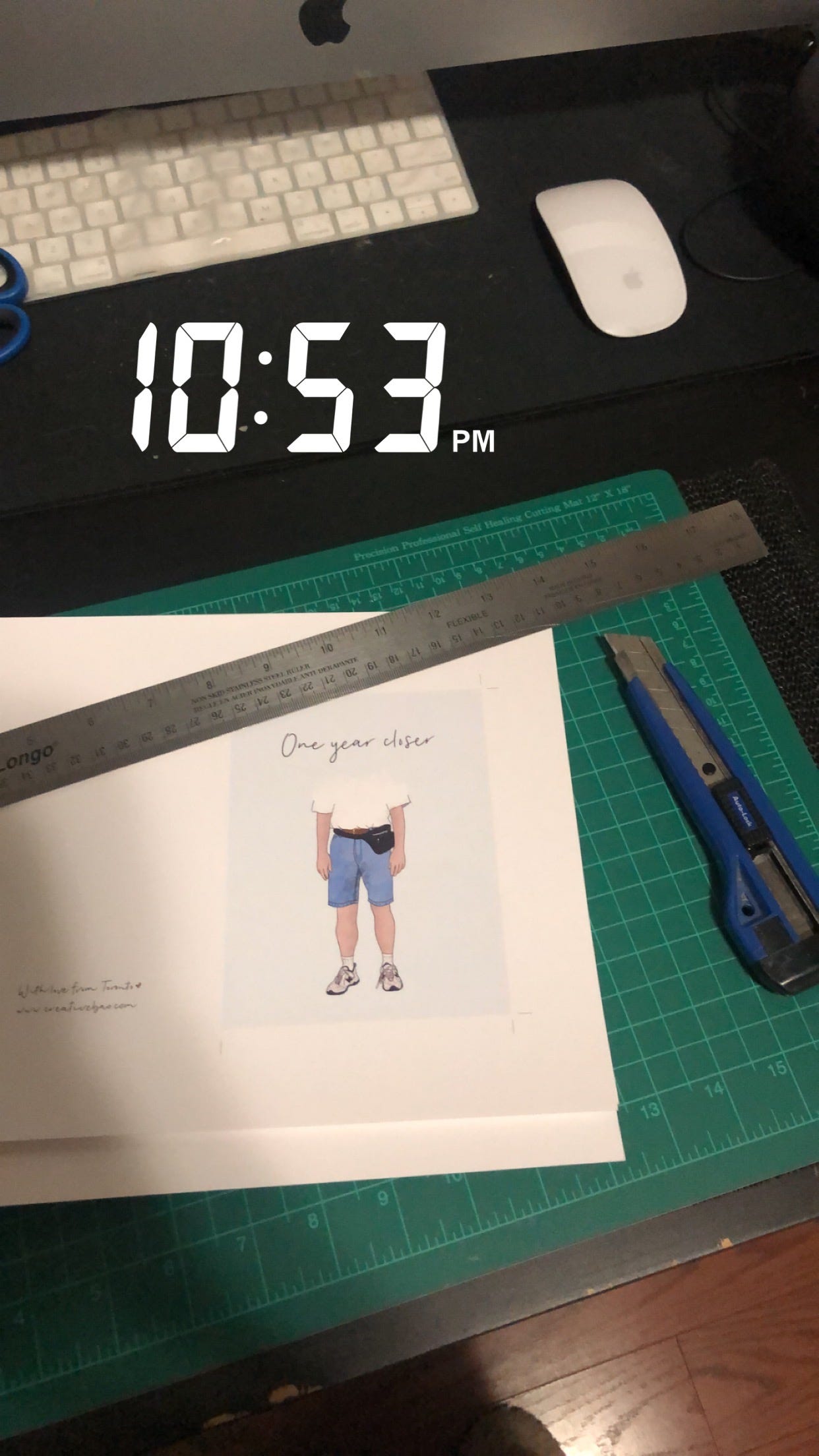
Oh, and I eventually had to ditch the ruler and exacto knife method cause it was taking way too long cutting every single card. I did it for almost 5 years and it was always stressful lol.
Now I use a guillotine cutter and/or work with local print shops.
2. I put all my energy into search instead of dancing on social media
When you have limited hours outside a 9-5 and family life, you cannot spend three hours a day making trending videos hoping an algorithm blesses you.
I focused on Etsy search intent and SEO. I learned what buyers were actually typing into search bars, used direct descriptive keywords, and let search traffic bring in customers who were already looking to buy.
Search did the heavy lifting in the background while I lived my life.
3. I treated card ideas like inventory and captured them instantly
Almost all of my bestselling cards are inspired by tiny, relatable moments from everyday life, inside jokes, and personal conversations.
The problem is, inspiration hits while you are commuting, folding laundry, or on a work call. The second an idea popped into my head, I jotted it down in my notes app immediately. That way, when I sat down at my desk on an evening or weekend, I never stared at a blank canvas wondering what to draw.
The concepts were already waiting for me.
Teasing what is next
This is just the surface of what goes into building an e-commerce brand alongside a full-time career and motherhood.
In future articles, I will break down the more of the behind the scenes of running it all: how to price physical products so your margins survive, how to source packaging that looks elevated without costing a fortune, how to find high-intent search keywords before you ever design a product, etc.
If you are currently sitting in your living room with a creative itch of your own, take this as your sign: you do not need the perfect setup, a massive audience, or complicated logistics to start. You just need to put your work out there and figure out the rest as you go.
With love,
Sally